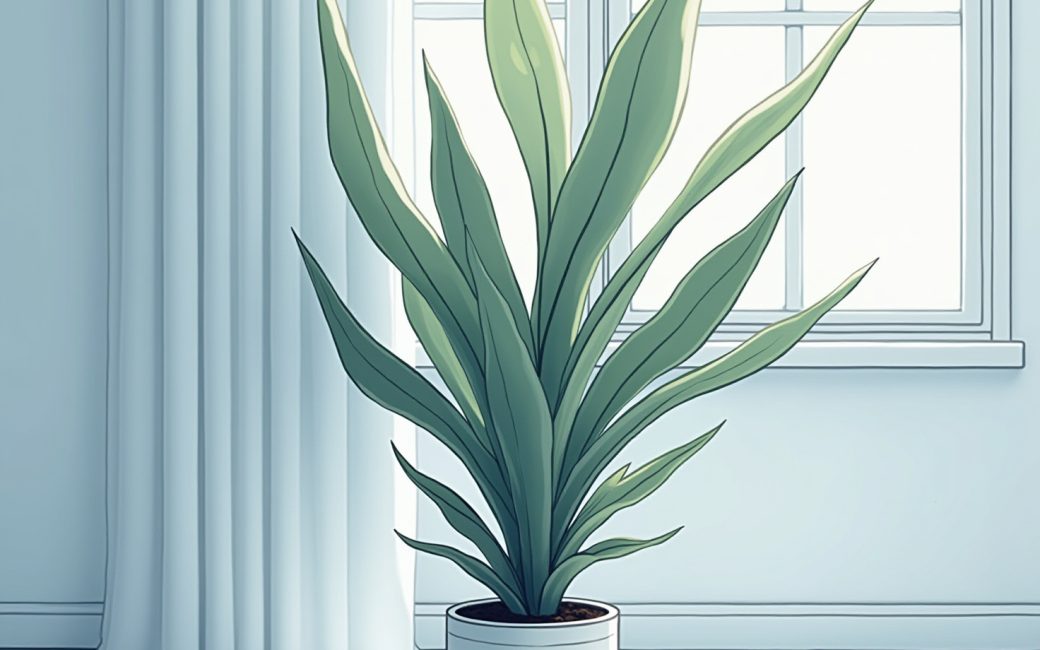
Room has little natural light
A north-facing window, a spot more than a few feet back from any window, or a room lit mostly by lamps counts as low light. Before choosing a plant for that spot, walk the room at midday and check whether it casts a soft shadow — a clear, sharp shadow means the light is strong enough for almost anything, while a faint or absent shadow means the space is genuinely low light.
Light-hungry plants such as calathea or an orchid will decline in that spot: leaves fade, growth slows to nothing, and stems stretch and thin as the plant reaches for a light source that isn't there. The University of Maryland Extension treats light as the first filter to apply when picking a houseplant, ahead of pot size or watering habits, because a plant matched to the wrong light level rarely recovers no matter how carefully everything else is managed.
Five plants tolerate that kind of dim, low-light spot well enough to be a genuine match rather than a compromise: the snake plant, pothos, philodendron, hoya, and monstera. Each is covered below with what makes it work in low light and where it still has limits. Calathea and the prayer plant, by contrast, are grouped later in this piece precisely because they need brighter, more humid conditions than a low-light room provides — they're common on plant shelves, but they're not a low-light answer.
Plant is watered on a fixed schedule regardless of conditions
Watering on a calendar — every Sunday, say — ignores the two things that actually determine when a plant needs water: how fast that species uses moisture and how much light and heat the room is providing that week. A snake plant in a dim corner and a pothos in a bright kitchen dry out at completely different rates, even side by side.
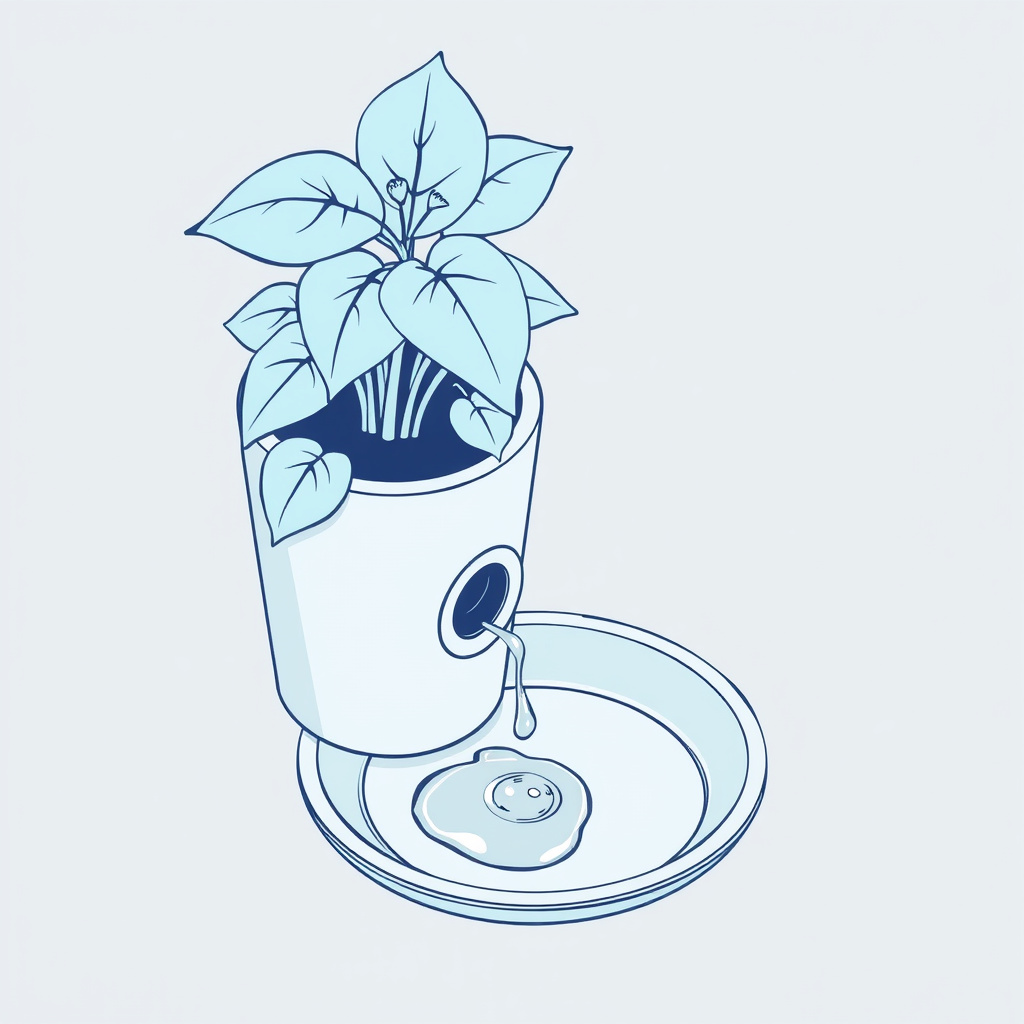
Soil that stays saturated in a pot without a drainage hole is the more common failure mode than underwatering. Roots sitting in standing water are cut off from oxygen and begin to rot within days, and by the time leaves show it — yellowing, softening, dropping — the root system is often already compromised.
The reliable rule, rather than a fixed number of days, is to check the soil directly and water only once it has dried to a set depth, then let the excess drain freely out the bottom:
- Push a finger into the soil about an inch or two down; if it comes out with soil sticking to it, wait.
- Use a pot with a drainage hole and a saucer, or a nursery pot set inside a decorative one, so water isn't trapped against the roots.
- Water until it runs from the drainage hole, then empty the saucer — don't let the pot sit in the runoff.
- Expect to water less often in winter, when growth slows and light levels drop, even for the same plant in the same spot.
This adapts the routine to the actual plant and the actual season, which a single "water once a week" instruction can't do.
Plant arrives by mail from a greenhouse
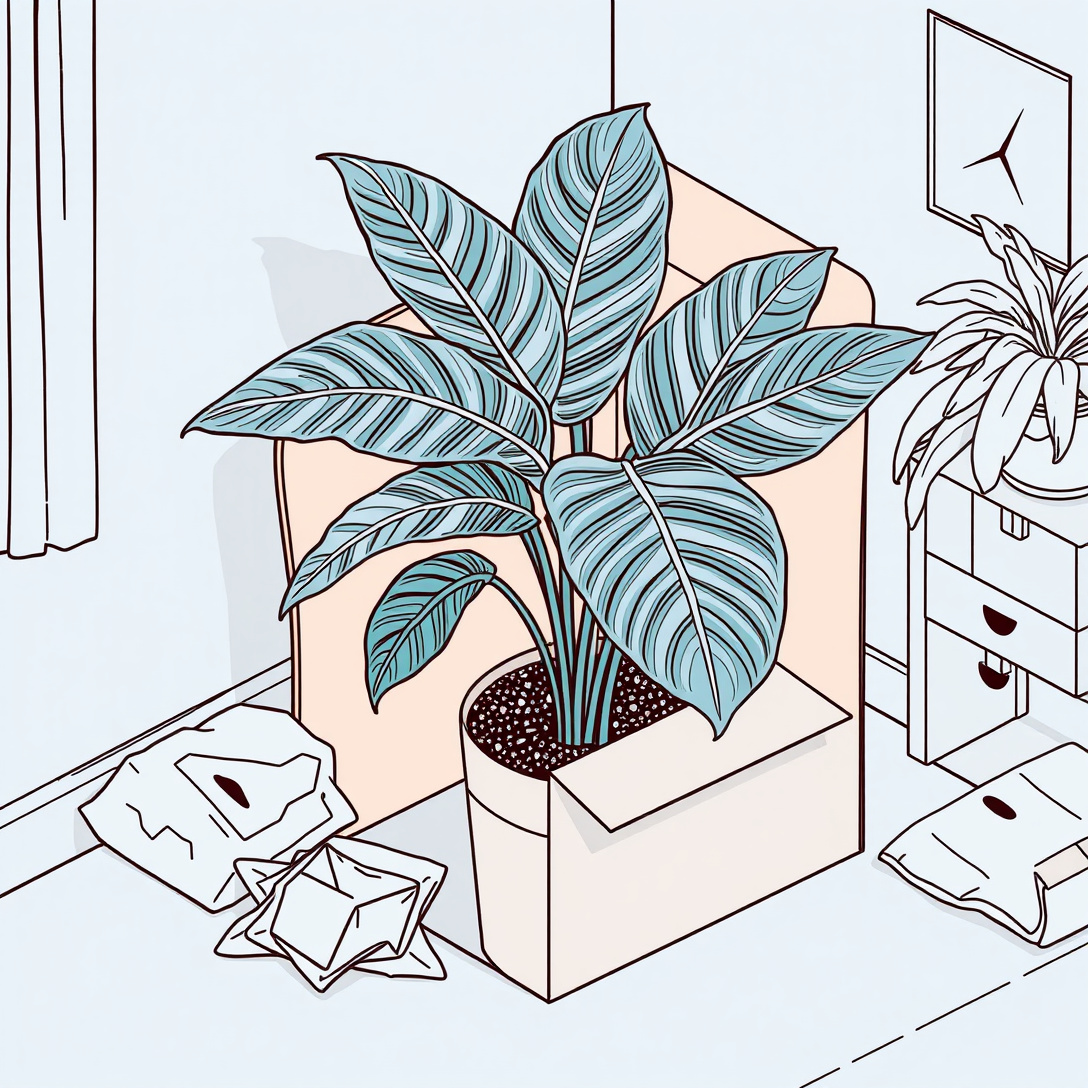
A plant shipped from a commercial greenhouse spends days in a box, then lands in a home that is darker, drier, and more temperature-variable than where it was grown. That shift is the reason a newly arrived plant can drop leaves or look stressed in its first weeks even when nothing about home care is wrong.
Greenhouses run higher humidity and more consistent, often stronger, light than most living rooms provide, so the plant is acclimating to a lower-light, lower-humidity environment at the same time it's recovering from transit. Following the specific light and watering guidance that comes with the plant during this adjustment period — rather than treating it like an already-settled specimen — matters more in the first few weeks than at any point afterward.
Give it time before judging the spot wrong: a few dropped lower leaves in the first month is common and doesn't necessarily mean the light or watering is off, provided new growth eventually appears. If new growth doesn't show within a few weeks and the plant continues declining, that's the point to reassess placement rather than earlier.
Snake plant
The snake plant (Dracaena trifasciata, formerly classified as Sansevieria) is an upright, succulent-leaved plant built to tolerate the conditions that kill most other houseplants: low light, irregular watering, and dry indoor air. Its leaves store water, which is why it's commonly recommended as a low-light, low-maintenance option for exactly the rooms described above — a north-facing window or a desk with no window nearby.
Because it stores water in its leaves, overwatering is the far more common way to lose a snake plant than underwatering; letting the soil dry out fully between waterings and using a well-draining pot matters more here than with most other foliage plants.
Indoor houseplant
An indoor houseplant is simply a plant grown inside a home rather than outdoors, and the category spans everything from a windowsill herb to a multi-foot indoor tree — Wikipedia's overview of houseplants traces the practice back to plants brought indoors originally for food, medicine, or ornament, long before "houseplant" became a retail category in its own right.
What unites the category isn't appearance but the fact that every plant in it depends entirely on the light, humidity, and temperature a household provides, rather than on natural rainfall or full sun. That dependency is why matching a plant's native growing conditions to a specific room is the real selection task — a step that's easy to skip when browsing by leaf shape or color alone, but that the Royal Horticultural Society's guidance on choosing houseplants treats as the starting point rather than an afterthought.
Monstera
Monstera is a tropical foliage genus, most commonly Monstera deliciosa, known for large, glossy leaves that develop natural splits and holes as the plant matures. It's a climbing plant in its native habitat, and indoors it eventually needs a moss pole or similar support plus a pot large enough to accommodate a root system that can outgrow a small container within a year or two of vigorous growth.
Monstera is the least forgiving of the five low-light-tolerant plants on this list, but it still belongs on it: it survives in a dim room where calathea would not, provided watering is scaled back to match slower growth. What changes in low light is the leaf itself — smaller, with fewer or no splits — rather than the plant's survival. Given a choice, put it a few feet back from an unobstructed window rather than in the dimmest corner of the room; direct sun, on the other hand, scorches the leaves.
Pothos
Pothos (Epipremnum aureum) is a trailing vine, usually grown from a hanging basket or trained along a shelf, and it's one of the most tolerant houseplants for exactly the low-light, inconsistent-watering conditions covered above. It roots readily in water, which makes it an easy way to propagate new plants from cuttings without any special equipment.
Variegated pothos varieties — leaves marked with white or yellow — need somewhat brighter light than the solid green forms to keep their patterning; in low light the variegation tends to fade back toward plain green, though the plant itself keeps growing.
Philodendron
Philodendron is a large tropical genus that includes both climbing vines and upright, non-vining forms, so "philodendron" on a plant tag doesn't tell you the growth habit — check whether the specific variety climbs or stays self-supporting before deciding where it will go and what it'll need for support. Climbing philodendrons behave much like pothos in terms of light tolerance and are commonly confused with it because the leaf shapes overlap; upright types generally need slightly more consistent moisture.
Most philodendrons tolerate medium to low light reasonably well, though — as with monstera — leaves stay smaller and growth slows the further a plant sits from a light source.
Hoya
Hoya is a trailing, waxy-leaved plant, sometimes called a wax plant, and its thick, succulent-like leaves work the same way a snake plant's do: they store water, which lets the plant go longer between waterings and tolerate lower light than a thin-leaved tropical foliage plant would manage. That combination makes it the fifth of the low-light-tolerant plants on this list, alongside the snake plant, pothos, philodendron, and monstera.
Hoya is usually grown trailing from a hanging pot or trained on a small trellis, and like pothos it's easy to propagate from stem cuttings. It flowers more reliably, and its foliage stays more compact, in brighter indirect light — in genuinely low light it will hold its leaves and keep growing but is unlikely to bloom, which is a reasonable trade-off for a spot with no better option.
Calathea
Calathea is grown for patterned, often boldly striped or colored foliage, and it's frequently listed alongside prayer plants because the two are closely related and share nearly identical care needs. Unlike the five plants above, calathea is not a low-light or forgiving choice: it wants consistently moist (not soggy) soil, higher humidity than most living rooms naturally provide, and bright indirect light rather than deep shade.
This is the plant referenced earlier as one that declines in a genuinely low-light spot — leaves curl, edges brown, and patterning fades when calathea is placed where a snake plant or hoya would be perfectly comfortable. It's better suited to a bathroom or kitchen with steady humidity and a bright but curtain-filtered window than to a dim hallway.
Prayer plant
Prayer plant, most often Maranta leuconeura, gets its name from a distinctive habit: its leaves fold upward in the evening and flatten out again during the day, a movement tied to the plant's light-response cycle. It belongs to the same family as calathea (Marantaceae) and is commonly sold and cared for as if interchangeable with it, since both want moist soil, higher humidity, and bright indirect rather than direct or low light.
The practical difference between the two is mostly cosmetic — leaf pattern and coloring — rather than a difference in care, so a routine built for one Marantaceae plant generally transfers to the other with only minor adjustment for a specific variety's stated light and humidity preference. Like calathea, it's not a substitute for the snake plant, pothos, philodendron, hoya, or monstera in a room that genuinely lacks light.
Start by walking your own rooms and noting where a clear shadow actually falls at midday — that single check will rule out more wrong purchases than any list of "easy" plants ever will.