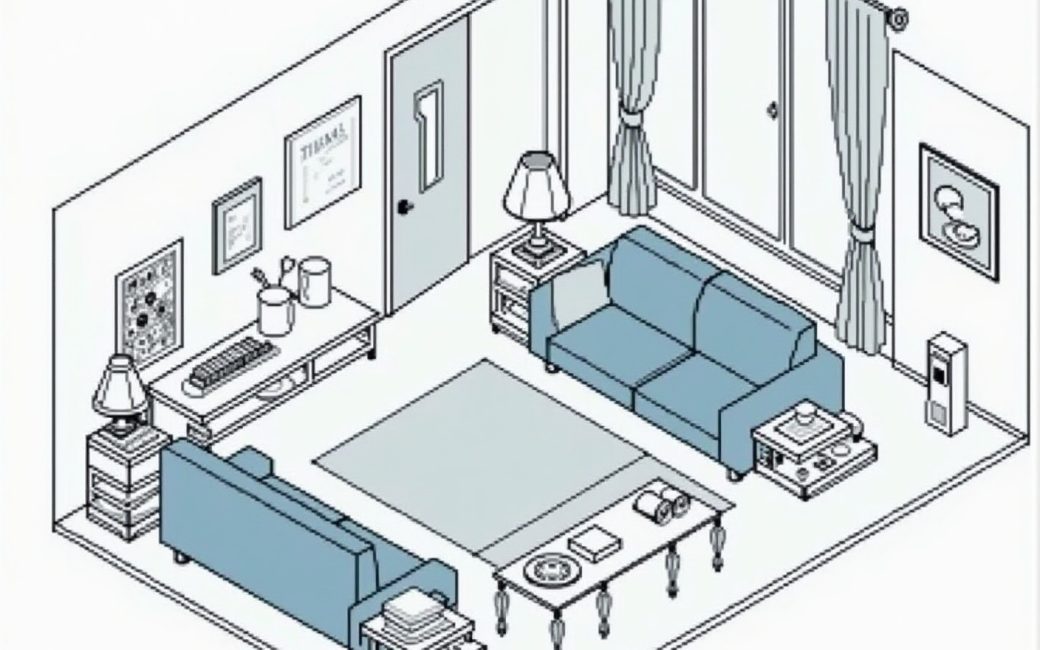
Small living room or oversized furniture
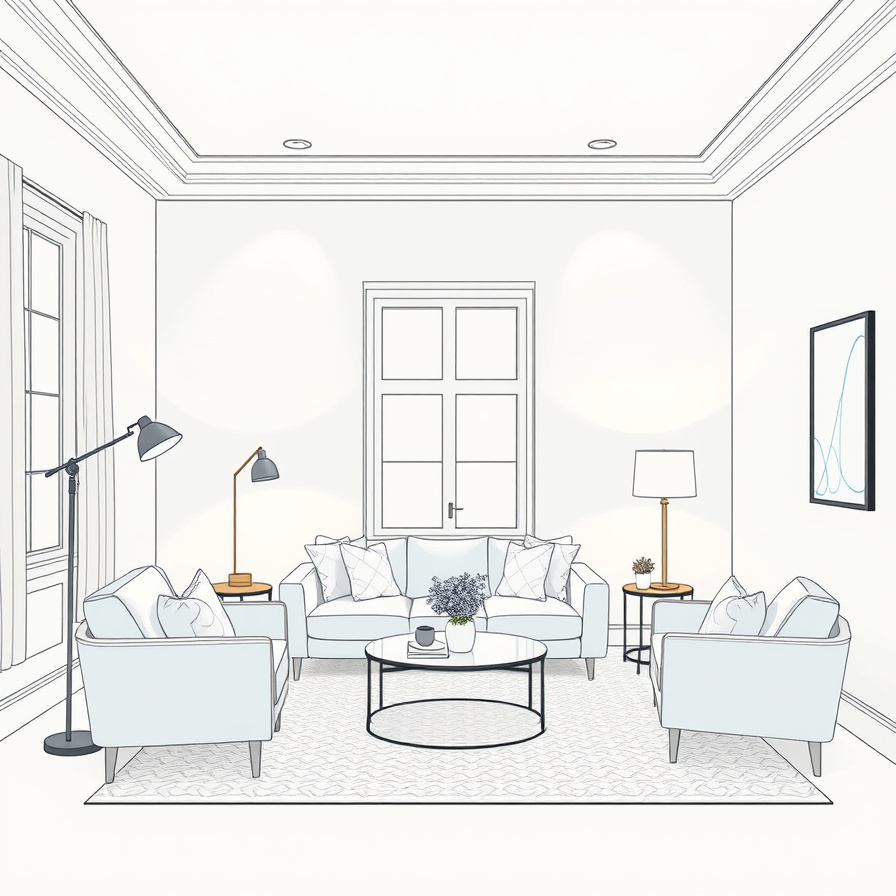
A living room that feels cramped usually isn't small — it's furnished with pieces sized for a bigger box. The sofa arm hits the doorway swing, the coffee table blocks the path to the window, and every trip across the room means turning sideways.
Start by diagnosing whether the problem is genuinely square footage or just scale. Walk the room's main routes — door to hallway, seating to TV, seating to kitchen pass-through — and if you're rerouting around furniture rather than walking a straight line, that's the layout complaint, not a small-room complaint.
- Measure the room and every doorway. Note the width of each entry point and the location of any fixed features — windows, radiators, a fireplace — before you look at a single sofa.
- Choose smaller-scale seating and tables. A sofa with slimmer arms, a lower back, or a loveseat instead of a three-seater can free the same clearance a bigger piece removes.
3. Re-plan the layout around clear walking routes. Interior designer Emily Henderson argues that a living room's biggest failures come from furniture placed to fill wall space rather than to serve how people actually move and sit in the room, and that fixing the traffic path should come before any styling decision — Style by Emily Henderson.
Do the measuring and the layout sketch before buying anything. A smaller sofa bought to fit an unmeasured gap is still a guess.
Room feels dark or visually heavy
A dark-feeling living room is almost always a light problem before it's a color problem. The fix depends on how much daylight the room actually gets, not on which paint deck looks best in the store.
Start by tracking the room across a full day — north-facing rooms get flatter, cooler light all day, while south-facing rooms swing from cool morning light to warm afternoon light. Farrow & Ball's living room guidance stresses testing a color at different times of day in the actual room before committing, since the same shade can read warm in one aspect and grey in another — Farrow & Ball. A sample board taped to the wall for 24 hours does more work than any swatch held under shop lighting.
Once you know the light you're working with, you have two honest routes, not one default answer:
- Lean lighter if the room gets limited direct light — pale, higher-reflectance walls bounce what daylight there is around the room rather than absorbing it.
- Lean into a darker scheme deliberately if the room reads flat rather than dim — a saturated wall color paired with layered lamp light can make a small-light room feel intentional rather than under-lit, provided the artificial lighting is doing real work: a floor lamp, a table lamp, and an overhead source rather than one central bulb.
Either route depends on adding lighting layers, not just choosing a wall color and hoping. A room painted dark with only one ceiling fixture will read gloomy regardless of the shade chosen.
Scheme looks incoherent or scattered
A living room that "looks off" but you can't say why is usually suffering from too many competing colors with no ratio governing them, plus accessories placed one at a time with no grouping logic. Both are fixable without buying new furniture.
Fixing color with the 60-30-10 rule
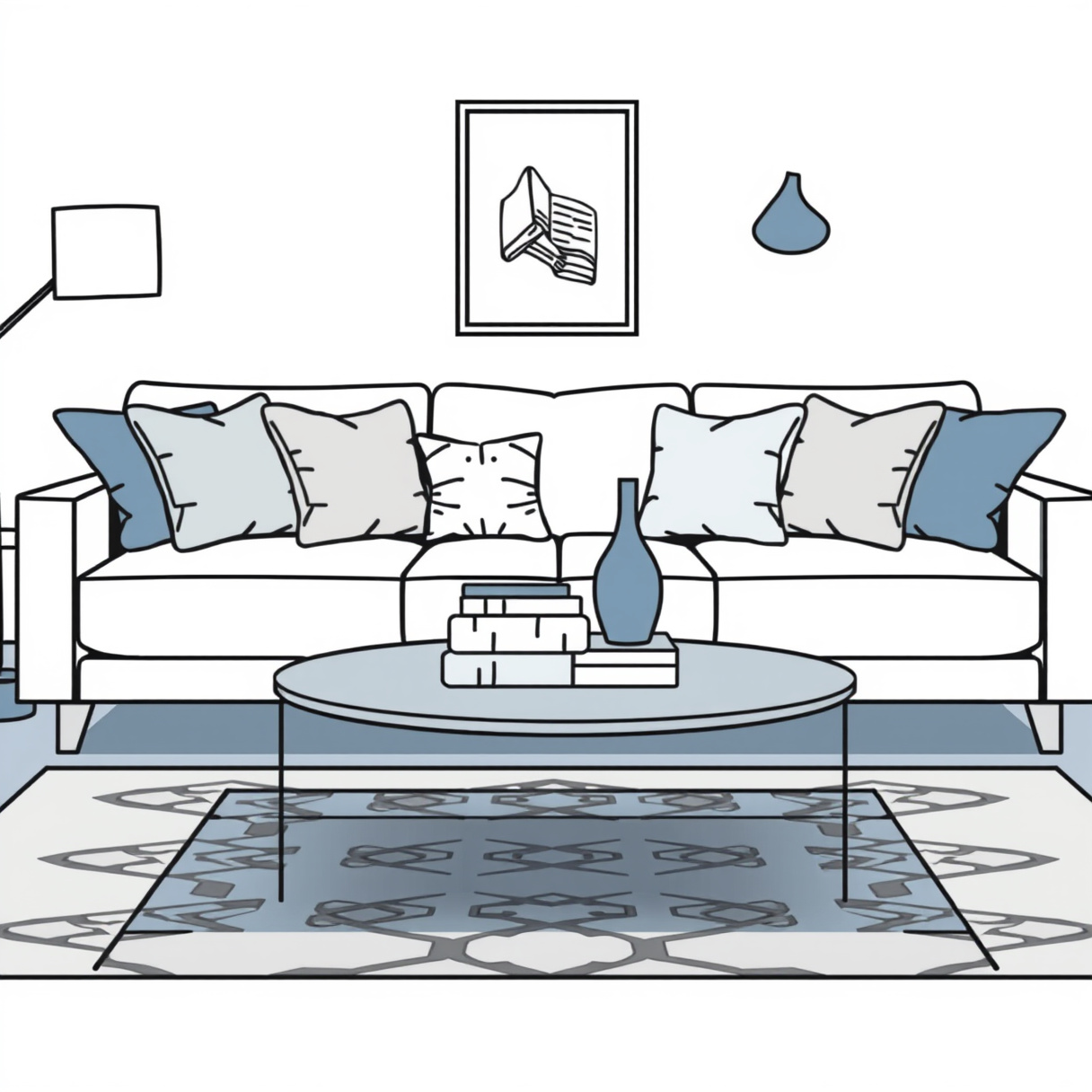
The 60-30-10 rule splits a room's palette into three proportions: 60% dominant color (walls, large upholstery), 30% secondary color (a rug, curtains, an accent chair), and 10% accent (cushions, art, small objects). Applied to a living room, that means picking the wall and sofa color first, a supporting color for the rug or curtains second, and saving the boldest color for the smallest, easiest-to-change pieces last. This is also why swapping cushions is the cheapest way to reset a room's mood — you're only touching the 10%.
Fixing clutter with the 3-5-7 rule
The 3-5-7 rule is a styling convention for grouping objects — on a coffee table, a mantel, or open shelving — in odd numbers, typically groups of three, five, or seven, at varied heights. Odd numbers and mixed heights read as arranged rather than lined up, which is the difference between a coffee table styled with a tray, a stack of books, and a single vase, versus the same three objects spaced evenly in a row.
Applied together: fix the wall-sofa-rug ratio first with 60-30-10, then regroup the small objects on the coffee table and shelves with 3-5-7. Do the proportions before the styling — a well-grouped coffee table on top of a chaotic wall-and-upholstery mix still won't resolve the room.
Sofa
The sofa is the anchor almost every other decision in the room refers back to — its size sets the scale of the coffee table, its color sets the 60% baseline in a 60-30-10 palette, and its placement sets the walking path measured earlier. Architectural Digest's living room roundups consistently treat the sofa as the fixed point a room is arranged around, with rugs, chairs, and tables chosen to its dimensions rather than the reverse — Architectural Digest.
Two measurements matter more than fabric or color when choosing one: depth relative to the room (a deep lounge sofa needs more floor space in front of it to remain walkable) and arm width relative to the doorway it has to pass through to get into the room at all. Getting either wrong is the single most common cause of the cramped feeling described above — it's rarely the room that's too small, it's the sofa that's too deep for it.
Coffee table
The coffee table's size and placement are governed by the sofa, not chosen independently. A table that's too large blocks the walking route measured earlier; one that's too small looks lost in front of a substantial sofa and does nothing to anchor the seating group.
| Consideration | What to check |
|---|---|
| Length relative to sofa | Roughly two-thirds the length of the sofa reads as proportionate rather than crowded or sparse |
| Distance from seating | Leave clearance in front of the sofa so legs and a tray can both fit without the table pressing into shins |
| Height relative to seat | The tabletop should sit at or slightly below sofa seat height so it's usable without reaching up |
| Shape vs. traffic path | A round or oval table softens a route that runs close past a corner; a rectangular table suits a room with space to spare on all sides |
Once the size and placement are settled, styling follows the 3-5-7 grouping described above — the table's dimensions decide how many objects it can hold without looking crowded.
Room layout
Layout is the decision every other choice in this article depends on, which is why it comes first in practice even though it's rarely named directly. The sequence that avoids expensive mistakes is: measure and plan circulation, then choose the sofa and coffee table to fit that plan, then set the palette with 60-30-10, then style with 3-5-7 last.
Practically, that means:
- Traffic paths first. Walk the room's actual routes before placing anything, and keep them clear rather than routing around furniture.
- Anchor piece second. The sofa's position — usually facing the room's focal point, whether that's a fireplace, a window, or a TV wall — decides where every other piece goes.
- Secondary seating third. An accent chair or second sofa completes the conversation grouping only once the anchor is fixed.
- Tables fourth. Coffee table and side tables are sized and placed relative to the seating already in the room.
- Palette fifth. Wall color and large upholstery choices come once the furniture footprint is set, not before.
- Accessories last. Cushions, art, and tabletop styling are the cheapest and quickest layer to change, which is why they're saved for the end rather than driving the plan.
This order also sorts spending by how committed each step is: rearranging furniture within a room costs nothing but time, a repaint is a weekend and a moderate materials cost, and replacing a sofa is the largest and least reversible expense in the sequence. Deciding layout first means you find out whether you actually need a new sofa before you've bought one that doesn't fit the room.
Measure the room this week, sketch the traffic path on paper, and hold off on any purchase until that sketch tells you what size the anchor piece actually needs to be.