
Homeowner sets a fixed budget (e.g. $10,000)
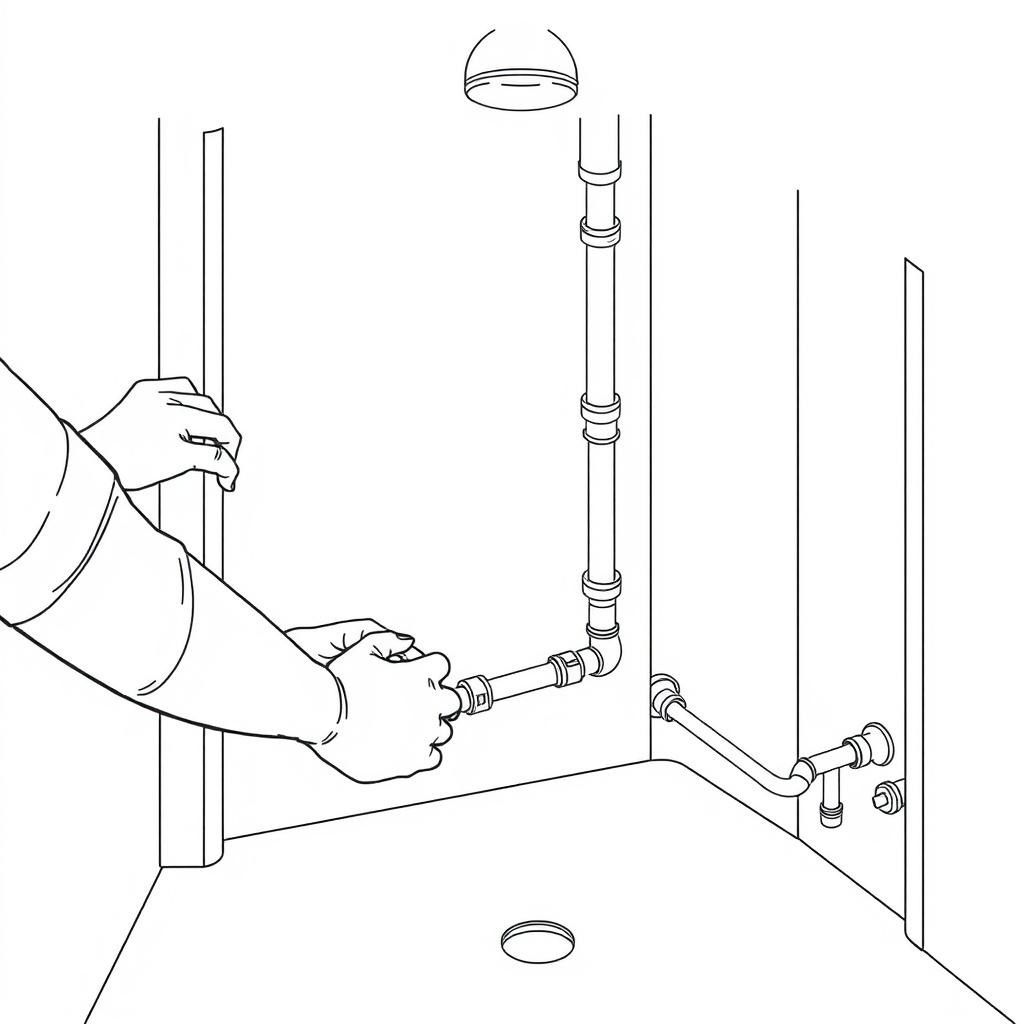
Ten thousand dollars buys a surface-level refresh, not a new floor plan. At this budget, the plumbing stays exactly where it already is — the toilet, tub, and vanity all drain into the same rough-in locations they use now — and the money goes toward finishes: a new tub surround or shower conversion, a replacement vanity and toilet, new flooring, paint, and lighting.
The reason the number caps out this way is that moving a drain line or a supply line is a framing-and-plumbing job, not a finish job, and it pulls in costs a fixed-scope budget can't absorb once it starts. So the practical move at this budget tier is to keep every fixture on its existing rough-in and spend the available money on:
- An acrylic tub surround or shower liner installed over the existing tub or shower base
- A tub-to-shower conversion, if the household no longer needs the tub, using the same plumbing stub-outs
- A new vanity, faucet, and toilet in the same footprint
- Flooring, paint, and a light fixture upgrade
This is also the scope that overlay-system companies are built around — one-day or short-duration installs that go over an existing tub or shower shell rather than tearing it out, which is why national installers like Bath Fitter advertise turnaround measured in days. That speed comes from working around the existing plumbing and structure rather than opening walls to reroute anything. It's a legitimate way to solve a worn, cracked, or hard-to-clean tub surround quickly, but it doesn't touch rot behind the wall, a leak already in progress, or a layout problem — those require demolition to even diagnose.
Layout change desired (tub removed, vanity moved)

The moment a fixture moves off its existing rough-in — the tub comes out and a shower goes in a different footprint, the vanity moves to the opposite wall, a toilet gets relocated for a better traffic path — the project stops being a refresh and becomes a plumbing job with finishes attached, and the budget and timeline both step up accordingly.
Relocating a fixture means opening the floor or wall to reroute supply and drain lines to the new position, which almost always requires a permit and inspection before the wall or floor can be closed back up. That inspection step exists specifically to catch problems — a drain slope that's wrong, a vent that's missing — before they're hidden behind tile, which is why it isn't optional and isn't something a homeowner can skip by hiring quickly. Because the work now touches structure and plumbing rough-in rather than just cosmetics, it calls for a licensed contractor rather than an installer running a one-day overlay system, and it's the single decision — move something, or don't — that separates a cosmetic-refresh price from a full-renovation price. If the plan already includes moving a fixture, budget and timeline planning should start from "full remodel," not from "surface update with extras."
Need a remodeler in a specific city
Finding a contractor for local work follows a repeatable sequence, whether the search is "bathroom remodeler near me" or a specific city name.
- Build a shortlist from reviews and directories. City-specific rating pages and directories — the kind covering Sacramento, Baltimore, or national guides like ConsumerAffairs' — are a reasonable starting point for names, but treat them as a longlist, not a decision.
- Verify licensing, insurance, and bonding before any of them set foot in the house. The Better Business Bureau lists complaint history and accreditation status, which is a useful cross-check against a contractor's own claims about their credentials.
- Collect multiple written, itemized estimates — not verbal quotes — so line items can be compared rather than just a bottom-line number.
- Compare scope line by line. Two bids at the same headline price can differ enormously in what they include: demolition and haul-away, permit fees, fixture allowances, waterproofing method. The cheaper number on paper is only cheaper if the scope is identical.
A written estimate that doesn't itemize demolition, permit costs, and fixture allowances separately is a red flag regardless of the total, because it hides where the money that's landed on the number actually goes.
Bathroom remodel
A bathroom remodel covers a spectrum from a weekend cosmetic update to a full gut-and-rebuild, and the term alone says nothing about which end of that spectrum a given project sits on. What determines cost and timeline isn't "remodel" versus "not a remodel" — it's scope: whether plumbing stays in place, whether walls come down, and whether the layout changes. Every other decision in the project — contractor type, permit requirements, materials budget — follows from that scope decision, which is why it's worth settling before requesting a single quote.
Shower
The shower is usually the most expensive single fixture decision in the room, and it comes in three basic forms that differ mainly in what they can and can't fix.
| Option | Keeps existing plumbing | Typical duration | Fixes rot/leaks | Fixes layout |
|---|---|---|---|---|
| Acrylic surround/liner over existing shower | Yes | Days | No | No |
| Tub-to-shower conversion, same footprint | Yes | Days to about a week | Sometimes (if opened) | No |
| Full tile shower with new pan, relocated drain | No | Multiple weeks | Yes | Yes |
An overlay system installed over a shower with hidden water damage behind it will look finished while leaving the underlying problem in place — it covers the surface but doesn't open the wall to inspect or repair it. If there's any suspicion of an existing leak, that's a reason to choose the demolition-based option even though it costs and takes more, because it's the only one of the three that lets anyone actually see the framing.
Bathtub
A homeowner with an existing bathtub generally has four paths available, in roughly ascending order of cost and disruption: refinish the existing tub's surface, install a liner or surround over it, replace it with a new tub in the same footprint, or remove it entirely to gain floor space for a curbless or larger shower.
Refinishing is the cheapest option and the shortest-lived — a resurfaced finish is a coating, not a new tub, and it will show wear sooner than any of the other three paths. Replacing in the same footprint keeps plumbing costs down while giving a genuinely new fixture. Removing the tub altogether is worth flagging for resale: a home with only one bathtub in the entire house can be a harder sell than one with at least one tub retained somewhere, which is a factor worth weighing against the appeal of a larger shower in the primary bath.
Installation
Installation — the physical labor of demolition, plumbing, waterproofing, and finish work — is typically the largest single cost share in a full remodel, which is why the same materials list can produce very different total prices depending on regional labor rates and how much demolition the project requires.
A full bathroom remodel with a layout change generally moves through the same sequence:
- Demolition of existing fixtures, flooring, and any walls being altered
- Rough-in plumbing and electrical relocated or updated to the new layout
- Inspection of the rough-in before walls close
- Waterproofing of the shower or tub surround
- Wall and floor finishes — tile, flooring, paint
- Fixture installation — vanity, toilet, tub or shower doors, lighting
- Final inspection and walkthrough
Skipping or compressing the waterproofing step is the most common way a remodel looks finished on move-in day and fails within a few years — it's not a step that can be shortened.
Remodel budget
The realistic range for a bathroom project is wide because scope, not room size, is what drives it. A cosmetic refresh that keeps every fixture in place can land near the lower end of what most households would call a bathroom remodel; a full gut with a layout change, new plumbing rough-in, and permits sits well above it. The most useful budgeting question isn't "what's the average cost of a bathroom remodel" — it's "does anything in my plan move a fixture off its existing rough-in," because that single answer determines which end of the range applies before a single quote comes in.
Regional labor rates also shift the number meaningfully: the same scope of work priced in a high-cost metro area and a lower-cost region can differ by a wide margin, which is one reason city-specific estimates from local contractors are more useful than a single national figure.
Project scope
Scope is the decision that should be made before budget, not after, because it determines which budget range is even realistic. Three scope categories cover almost every bathroom project:
- Surface update: fixtures stay in place, new finishes throughout — paint, flooring, vanity, tub surround or liner.
- Full gut, same layout: everything comes out and gets replaced, but plumbing and fixtures return to their existing locations.
- Layout change: one or more fixtures relocate, requiring new plumbing rough-in, permits, and inspection.
Defining scope in writing before soliciting estimates is what makes contractor bids comparable — without it, three contractors will quote three different projects while appearing to quote the same room.
Bathroom contractor / remodeler
The contractor a project needs depends on the scope decided above. A surface update or overlay conversion can reasonably be handled by an installer specializing in that system, of the kind Re-Bath or similar companies operate in specific markets. A full gut or layout change calls for a general contractor or remodeling specialist who can coordinate licensed plumbing and electrical subcontractors and manage the permit and inspection process — a different skill set than a fixed-system installer, and worth naming explicitly when requesting quotes so bidders are being asked for the right kind of job. Local remodeling companies, such as TW Ellis in the Baltimore–Harford County area, typically describe both cosmetic and full-gut services separately for exactly this reason.
Licensing, insurance and bonding
Before any contractor starts demolition, three credentials are worth confirming, not assuming: a current license for the trade and jurisdiction, general liability insurance, and — for larger jobs — a bond. The Better Business Bureau is a reasonable place to cross-check accreditation status and complaint history against what a contractor claims about themselves, though it shouldn't be the only check; state or local licensing boards typically maintain their own searchable registries.
Insurance matters most when something goes wrong mid-project — a burst line, a fall, damage to an adjoining room — because an uninsured contractor leaves the homeowner holding that cost. Asking to see a current certificate of insurance, not just a verbal assurance, is a normal and expected request at the estimate stage, not a sign of distrust.
The next step is the one that actually locks in a number: decide which scope category the project falls into, write it down in plain terms, and take that same written scope to at least three contractors for itemized bids before comparing a single price.